170/80A Size Meaning
170/80A Size Meaning. Size xs(150/76a) s(155/80a) m(160/84a) l(165/88a) xl(170/92a) xxl(175/96a) xxxl(180/100a) xxxxl(185/104a) int'l size xxs xs s m l xl xxl xxxl us 0 1 2 4 6 8 10 12. By allowing these third party services, you accept their cookies and the use of tracking technologies necessary for their proper functioning.
The relationship between a symbol to its intended meaning can be called"the theory that explains meaning.. This article we'll discuss the problems with truth-conditional theories of meaning, Grice's analysis of speaker-meaning and an analysis of the meaning of a sign by Tarski's semantic model of truth. In addition, we will examine theories that contradict Tarski's theory about truth.
Arguments against the truth-based theories of meaning
Truth-conditional theories regarding meaning claim that meaning is the result of the conditions for truth. However, this theory limits definition to the linguistic phenomena. The argument of Davidson is that truth-values do not always accurate. Therefore, we should be able discern between truth values and a plain statement.
Epistemic Determination Argument Epistemic Determination Argument is a way to support truth-conditional theories of meaning. It relies on two fundamental assumption: the omniscience of non-linguistic facts as well as knowing the truth-condition. However, Daniel Cohnitz has argued against these assumptions. Thus, the argument does not hold any weight.
Another frequent concern with these theories is that they are not able to prove the validity of meaning. However, this issue is resolved by the method of mentalist analysis. This way, meaning is assessed in the terms of mental representation, instead of the meaning intended. For instance one person could get different meanings from the identical word when the same person is using the same phrase in 2 different situations, but the meanings of those words may be the same depending on the context in which the speaker is using the same phrase in at least two contexts.
Though the vast majority of theories that are based on the foundation of understanding of meaning seek to explain its meaning in way of mental material, non-mentalist theories are sometimes pursued. It could be due doubts about mentalist concepts. They are also favored for those who hold that mental representation should be analyzed in terms of linguistic representation.
Another key advocate of this idea is Robert Brandom. This philosopher believes that value of a sentence in its social context as well as that speech actions that involve a sentence are appropriate in the setting in which they are used. Therefore, he has created a pragmatics concept to explain the meaning of sentences using traditional social practices and normative statuses.
Issues with Grice's analysis of speaker-meaning
Grice's analysis of speaker meaning places significant emphasis on the utterer's intentions and their relation to the significance of the statement. Grice argues that intention is something that is a complicated mental state that needs to be understood in an attempt to interpret the meaning of sentences. However, this theory violates the principle of speaker centrism, which is to analyze U-meaning without M-intentions. In addition, Grice fails to account for the possibility that M-intentions do not have to be restricted to just one or two.
Furthermore, Grice's theory fails to account for some significant instances of intuitive communication. For example, in the photograph example of earlier, the individual speaking does not clarify whether the subject was Bob either his wife. This is a problem because Andy's photo doesn't specify the fact that Bob or wife is unfaithful , or faithful.
Although Grice is correct the speaker's meaning is more fundamental than sentence-meaning, there is still room for debate. Actually, the distinction is crucial for the naturalistic acceptance of non-natural meaning. In reality, the aim of Grice is to give naturalistic explanations for the non-natural significance.
To understand the meaning behind a communication, we must understand the intent of the speaker, which is complex in its embedding of intentions and beliefs. But, we seldom draw sophisticated inferences about mental states in common communication. Consequently, Grice's analysis of meaning-of-the-speaker is not in accordance with the psychological processes that are involved in the comprehension of language.
While Grice's account of speaker-meaning is a plausible explanation about the processing, it's not complete. Others, including Bennett, Loar, and Schiffer have come up with more in-depth explanations. These explanations, however, reduce the credibility to the Gricean theory, as they regard communication as an act of rationality. In essence, the audience is able to believe in what a speaker says because they understand the speaker's intentions.
Furthermore, it doesn't explain all kinds of speech actions. Grice's model also fails recognize that speech is often used to explain the significance of a sentence. This means that the content of a statement is reduced to the speaker's interpretation.
The semantic theory of Tarski's is not working. of truth
While Tarski declared that sentences are truth bearers It doesn't necessarily mean that it is necessary for a sentence to always be truthful. Instead, he sought out to define what constitutes "true" in a specific context. His theory has since become an integral component of modern logic and is classified as a correspondence or deflationary theory.
One problem with this theory of the truthful is that it is unable to be applied to a natural language. The reason for this is Tarski's undefinabilitytheorem, which affirms that no bilingual language can contain its own truth predicate. While English could be seen as an in the middle of this principle and this may be the case, it does not contradict the view of Tarski that natural languages are semantically closed.
Nonetheless, Tarski leaves many implicit limitations on his theory. For example the theory should not contain false statements or instances of the form T. In other words, any theory should be able to overcome being a victim of the Liar paradox. Another problem with Tarski's theory is that it is not in line with the work of traditional philosophers. Additionally, it is not able to explain every single instance of truth in terms of the common sense. This is an issue for any theories of truth.
The second problem is that Tarski's definitions requires the use of notions taken from syntax and set theory. These are not the best choices for a discussion of endless languages. Henkin's language style is well-established, however, it doesn't fit Tarski's conception of truth.
In Tarski's view, the definition of truth also controversial because it fails make sense of the complexity of the truth. In particular, truth is not able to serve as an axiom in an interpretation theory, and Tarski's definition of truth cannot clarify the meaning of primitives. Furthermore, his definitions of truth isn't in accordance with the concept of truth in theory of meaning.
However, these issues should not hinder Tarski from using the truth definition he gives and it does not qualify as satisfying. In reality, the definition of truth isn't so straight-forward and is determined by the specifics of the language of objects. If you're interested to know more about the subject, then read Thoralf's 1919 work.
The problems with Grice's approach to sentence-meaning
Grice's problems with his analysis on sentence meaning can be summarized in two key elements. First, the purpose of the speaker should be understood. Furthermore, the words spoken by the speaker must be accompanied by evidence that shows the intended effect. However, these criteria aren't satisfied in all cases.
The problem can be addressed by altering Grice's interpretation of meaning of sentences, to encompass the significance of sentences that do have no intentionality. The analysis is based on the notion that sentences can be described as complex and contain several fundamental elements. This is why the Gricean analysis does not take into account other examples.
This argument is especially problematic when we consider Grice's distinctions between speaker-meaning and sentence-meaning. This distinction is crucial to any naturalistically sound account of the meaning of a sentence. This theory is also vital to the notion of implicature in conversation. On the 27th of May, 1957 Grice offered a fundamental theory on meaning that was refined in later papers. The basic notion of meaning in Grice's study is to think about the intention of the speaker in determining what the speaker is trying to communicate.
Another issue with Grice's analysis is that it fails to take into account intuitive communication. For example, in Grice's example, it's unclear what Andy intends to mean when he claims that Bob is not faithful to his wife. However, there are plenty of cases of intuitive communications that cannot be explained by Grice's explanation.
The main claim of Grice's analysis requires that the speaker must be aiming to trigger an emotion in an audience. But this isn't intellectually rigorous. Grice fixates the cutoff upon the basis of the potential cognitive capacities of the person who is the interlocutor as well the nature of communication.
Grice's argument for sentence-meaning cannot be considered to be credible, although it's a plausible account. Other researchers have devised better explanations for meaning, yet they are less plausible. In addition, Grice views communication as a rational activity. Audiences are able to make rational decisions because they are aware of what the speaker is trying to convey.
By allowing these third party services, you accept their cookies and the use of tracking technologies necessary for their proper functioning. International size in centimetres men's pants/trousers 81 reference. Size is a country through measurement, analysis, taking the average worth to.
By Allowing These Third Party Services, You Accept Their Cookies And The Use Of Tracking Technologies Necessary For Their Proper Functioning.
Size is a country through measurement, analysis, taking the average worth to. Eider outdoor revient le 1er aout 2023. In this example the tire diameter or height is 33 inches tall.
If Your Measurement Is Between Two Sizes, We Recommend You Select The Larger.
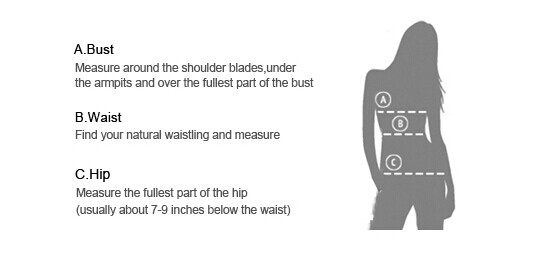
* the measurements in the guide are based on measurements taken directly from the body, not the garment. The dress size converter for american, australian, british, irish, new zealand, canadian, european, frenchman, spanish,german, italian, chinese, japanese,russian. Sizing varies greatly between designers.
Shop Timeless Clothing Designed With Longevity In Mind.
To find the tire size meaning in inches is very straight forward. The first number is your overall diameter of the tire. If not, please match your measurements (in inches) to.
China Bottom 160/66A 165/68A 170/70A 175/72A 180/74A 185/76A;
Here is our international bra size conversion table to help you with different size systems. With scandinavian beginnings, filippa k offers warm minimalist pieces for women & men mindfully made with style, simplicity, &. 160/80a 165/84a 170/88a 175/92a 180/96a 185/100a;
China Men's Pants/Trousers 170/80A (M) Australia/Newzealand Men's Pants/Trousers 32/82 Europe Men's.
Our products are designed for high fashion and unrivaled comfort, with footwear following european size format. Japan 5 7 9 11 13 15; Woman's size s m l xl 2xl 3xl;

Post a Comment for "170/80A Size Meaning"