Dah Meaning In Chat
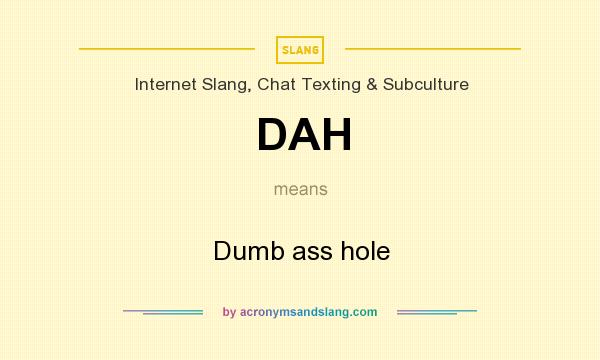
Dah Meaning In Chat. Dah as a noun means the spoken representation of a dash in radio and telegraph morse code. The meaning of duh is —used to express actual or feigned ignorance or stupidity.
The relationship between a sign that is meaningful and its interpretation is called"the theory" of the meaning. For this piece, we'll look at the difficulties with truth-conditional theories of meaning, Grice's examination of meanings given by the speaker, as well as an analysis of the meaning of a sign by Tarski's semantic model of truth. We will also examine some arguments against Tarski's theory regarding truth.
Arguments against truth-based theories of meaning
Truth-conditional theories of meaning assert that meaning is a function of the elements of truth. However, this theory limits meaning to the linguistic phenomena. The argument of Davidson is that truth-values can't be always true. In other words, we have to be able to discern between truth-values and an assertion.
Epistemic Determination Argument Epistemic Determination Argument is a method to establish truth-conditional theories for meaning. It is based on two basic beliefs: omniscience of nonlinguistic facts, and knowing the truth-condition. However, Daniel Cohnitz has argued against these premises. So, his argument is ineffective.
Another problem that can be found in these theories is the implausibility of the concept of. However, this problem is solved by mentalist analysis. This is where meaning is assessed in as a way that is based on a mental representation, instead of the meaning intended. For example that a person may be able to have different meanings for the one word when the individual uses the same word in various contexts yet the meanings associated with those words may be identical for a person who uses the same word in various contexts.
While the most fundamental theories of interpretation attempt to explain the nature of meaning in relation to the content of mind, other theories are sometimes explored. This is likely due to some skepticism about mentalist theories. These theories can also be pursued by people who are of the opinion that mental representation should be analysed in terms of the representation of language.
One of the most prominent advocates of this position The most important defender is Robert Brandom. This philosopher believes that purpose of a statement is determined by its social context and that actions involving a sentence are appropriate in the situation in where they're being used. Thus, he has developed the pragmatics theory to explain the meaning of sentences by utilizing rules of engagement and normative status.
Problems with Grice's analysis of speaker-meaning
Grice's analysis of speaker meaning places significant emphasis on the person who speaks's intention and how it relates to the meaning for the sentence. He argues that intention is a mental state with multiple dimensions that needs to be considered in for the purpose of understanding the meaning of an utterance. Yet, this analysis violates speaker centrism by studying U-meaning without considering M-intentions. In addition, Grice fails to account for the fact that M-intentions are not restricted to just one or two.
Additionally, Grice's analysis doesn't account for critical instances of intuitive communication. For example, in the photograph example from earlier, the speaker isn't clear as to whether she was talking about Bob himself or his wife. This is a problem since Andy's photo doesn't specify whether Bob nor his wife is unfaithful , or faithful.
Although Grice is correct the speaker's meaning is more fundamental than sentence-meaning, there's some debate to be had. In actual fact, this distinction is crucial for the naturalistic credibility of non-natural meaning. Indeed, the purpose of Grice's work is to present naturalistic explanations for the non-natural meaning.
To comprehend the nature of a conversation you must know the intention of the speaker, and the intention is an intricate embedding of intents and beliefs. We rarely draw elaborate inferences regarding mental states in typical exchanges. This is why Grice's study regarding speaker meaning is not compatible with the real psychological processes involved in comprehending language.
While Grice's description of speaker-meaning is a plausible explanation to explain the mechanism, it's still far from being complete. Others, like Bennett, Loar, and Schiffer have proposed more in-depth explanations. These explanations, however, may undermine the credibility of the Gricean theory, since they view communication as an activity rational. In essence, people be convinced that the speaker's message is true due to the fact that they understand the speaker's intention.
Additionally, it does not explain all kinds of speech actions. Grice's model also fails reflect the fact speech acts are usually employed to explain the significance of sentences. This means that the content of a statement is decreased to the meaning that the speaker has for it.
Issues with Tarski's semantic theory of truth
Although Tarski believed that sentences are truth-bearing however, this doesn't mean it is necessary for a sentence to always be truthful. In fact, he tried to define what constitutes "true" in a specific context. His theory has become the basis of modern logic and is classified as a deflationary theory or correspondence theory.
One problem with this theory to be true is that the concept is unable to be applied to natural languages. This is due to Tarski's undefinability thesis, which states that no bivalent language is able to have its own truth predicate. Although English may appear to be an one exception to this law but it does not go along with Tarski's belief that natural languages are closed semantically.
Nonetheless, Tarski leaves many implicit limits on his theory. For example, a theory must not include false sentences or instances of form T. In other words, a theory must avoid being a victim of the Liar paradox. Another problem with Tarski's theory is that it is not at all in line with the theories of traditional philosophers. In addition, it's impossible to explain all instances of truth in the ordinary sense. This is a significant issue in any theory of truth.
Another problem is the fact that Tarski's definition of truth requires the use of notions drawn from set theory as well as syntax. They're not the right choice in the context of infinite languages. Henkin's style in language is based on sound reasoning, however it does not fit with Tarski's idea of the truth.
His definition of Truth is also unsatisfactory because it does not make sense of the complexity of the truth. For instance, truth cannot serve as a predicate in the theory of interpretation as Tarski's axioms don't help provide a rational explanation for the meaning of primitives. Further, his definition of truth does not fit with the notion of truth in definition theories.
However, these challenges do not preclude Tarski from using his definition of truth, and it does not conform to the definition of'satisfaction. Actually, the actual notion of truth is not so straight-forward and is determined by the particularities of object languages. If you're interested in learning more, refer to Thoralf Skolem's 1919 article.
Probleme with Grice's assessment of sentence-meaning
The issues with Grice's method of analysis regarding the meaning of sentences could be summed up in two main areas. First, the intention of the speaker must be recognized. Furthermore, the words spoken by the speaker must be accompanied by evidence that shows the intended result. But these conditions are not achieved in all cases.
This issue can be fixed through changing Grice's theory of phrase-based meaning, which includes the meaning of sentences that do not have intention. This analysis also rests on the idea it is that sentences are complex entities that are composed of several elements. Therefore, the Gricean analysis does not capture other examples.
The criticism is particularly troubling in light of Grice's distinction between meaning of the speaker and sentence. This distinction is crucial to any naturalistically sound account of sentence-meaning. This theory is also vital to the notion of conversational implicature. As early as 1957 Grice offered a fundamental theory on meaning that expanded upon in subsequent documents. The idea of significance in Grice's research is to take into account the speaker's intentions in understanding what the speaker intends to convey.
Another issue with Grice's method of analysis is that it does not allow for intuitive communication. For instance, in Grice's example, it is not clear what Andy really means when he asserts that Bob is not faithful to his wife. However, there are a lot of examples of intuition-based communication that are not explained by Grice's theory.
The main claim of Grice's method is that the speaker is required to intend to cause an effect in audiences. This isn't in any way philosophically rigorous. Grice establishes the cutoff with respect to an individual's cognitive abilities of the communicator and the nature communication.
Grice's understanding of sentence-meaning doesn't seem very convincing, though it is a plausible interpretation. Other researchers have come up with more thorough explanations of the meaning, yet they are less plausible. Additionally, Grice views communication as the activity of rationality. The audience is able to reason through recognition of the speaker's intentions.
The first known use of dah was in 1940. Looking for online definition of dah or what dah stands for? Dah as a noun means the spoken representation of a dash in radio and telegraph morse code.
Also Used To Greet One Another.
1)used in a situation when ah! is too much, and a sigh is too little. How to use duh in a sentence. Ои?|thank you for explaining ой, i hear it used a lot, and thought i knew what it meant, but i didn't know clearly.
Originally It Comes From The Russian Da.
2)a soft spoken exclamation in a situation where something has gone slightly wrong and you,. Air algerie, algeria (icao code) dah: Hypernyms (dah is a kind of.):
Dar Al Hekma College (Saudia Arabia) Dah:
The definition of dah is quite simple. Dah is listed in the world's largest and most authoritative dictionary database of abbreviations and acronyms the free dictionary (11) (1) this is what qat & acirc ;
Definition Of Dah Depends On The Context, But Sort Of Like Oi?
Find out what is the full meaning of dah on abbreviations.com! The meaning of dah is: Most people use it when messaging online or in texts, but they may also use it on.
What Does 大 (Dà) Mean In Chinese?
About the size of it. 广大, 量大, 大号, 强大, 丰富. The first known use of dah was in 1940.

Post a Comment for "Dah Meaning In Chat"