Mutton Dressed As Lamb Meaning
Mutton Dressed As Lamb Meaning. Assuming you deliberately reversed the moniker a teen dressed in curlers and an old lady dress, the correct term of. Strictly come dancing judge shirley ballas responded to a number of viewers on social media over the weekend, including issuing a defiant reply to one who branded her.
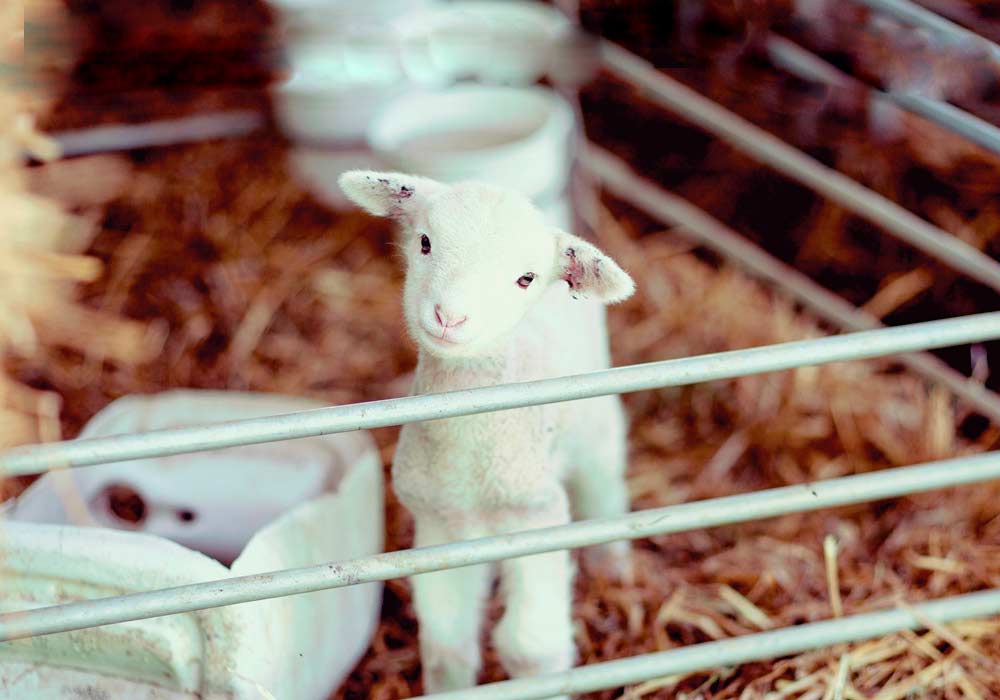
The relationship between a symbol as well as its significance is known as the theory of meaning. It is in this essay that we'll discuss the challenges of truth-conditional theories of meaning, Grice's study of the meaning of the speaker and its semantic theory on truth. We will also consider some arguments against Tarski's theory regarding truth.
Arguments against the truth-based theories of significance
Truth-conditional theories of meaning assert that meaning is the result in the conditions that define truth. But, this theory restricts its meaning to the phenomenon of language. The argument of Davidson is that truth-values can't be always truthful. In other words, we have to be able to distinguish between truth-values and a simple statement.
The Epistemic Determination Argument is an attempt to support truth-conditional theories of meaning. It relies on two fundamental foundational assumptions: omniscience over nonlinguistic facts and the knowing the truth-condition. However, Daniel Cohnitz has argued against these premises. So, his argument does not have any merit.
Another concern that people have with these theories is the implausibility of meaning. However, this problem is dealt with by the mentalist approach. The meaning is examined in as a way that is based on a mental representation, instead of the meaning intended. For example one person could use different meanings of the words when the person uses the exact word in various contexts, but the meanings of those words could be identical in the event that the speaker uses the same phrase in both contexts.
While the major theories of meaning attempt to explain the meaning in terms of mental content, non-mentalist theories are sometimes pursued. This could be because of doubts about mentalist concepts. They are also favored as a result of the belief mental representation should be considered in terms of the representation of language.
Another major defender of this position Another major defender of this view is Robert Brandom. This philosopher believes that value of a sentence determined by its social context and that the speech actions that involve a sentence are appropriate in the setting in which they're utilized. Therefore, he has created an understanding of pragmatics to explain the meaning of sentences using cultural normative values and practices.
Probleme with Grice's approach to speaker-meaning
Grice's analysis of speaker-meaning places significant emphasis on the utterer's intention as well as its relationship to the meaning to the meaning of the sentence. He argues that intention is a mental state with multiple dimensions that must be considered in for the purpose of understanding the meaning of sentences. However, this interpretation is contrary to speaker centrism by looking at U-meaning without M-intentions. Additionally, Grice fails to account for the possibility that M-intentions do not have to be limitless to one or two.
Additionally, Grice's analysis doesn't take into consideration some important instances of intuitive communications. For instance, in the photograph example previously mentioned, the speaker doesn't clarify if his message is directed to Bob or wife. This is an issue because Andy's picture does not indicate the fact that Bob as well as his spouse is unfaithful or faithful.
Although Grice believes that speaker-meaning is more important than sentence-meaning, there's still room for debate. The difference is essential to the naturalistic respectability of non-natural meaning. In the end, Grice's mission is to present naturalistic explanations of this non-natural significance.
To fully comprehend a verbal act, we must understand the intention of the speaker, and that intention is complex in its embedding of intentions and beliefs. Yet, we rarely make difficult inferences about our mental state in everyday conversations. So, Grice's understanding regarding speaker meaning is not compatible with the real psychological processes that are involved in understanding of language.
While Grice's explanation of speaker meaning is a plausible explanation for the process it's still far from being complete. Others, like Bennett, Loar, and Schiffer, have developed more detailed explanations. These explanations, however, make it difficult to believe the validity that is the Gricean theory, as they regard communication as an intellectual activity. In essence, audiences are conditioned to be convinced that the speaker's message is true as they comprehend the speaker's motives.
It does not cover all types of speech actions. Grice's model also fails take into account the fact that speech acts are commonly used to explain the meaning of a sentence. The result is that the meaning of a sentence is reduced to the meaning of its speaker.
Problems with Tarski's semantic theories of truth
While Tarski believed that sentences are truth-bearing however, this doesn't mean the sentence has to always be true. Instead, he sought out to define what is "true" in a specific context. His theory has become an integral part of contemporary logic, and is classified as a deflationary theory or correspondence theory.
One problem with the notion of reality is the fact that it can't be applied to any natural language. This is because of Tarski's undefinability theorem. It asserts that no bivalent languages can be able to contain its own predicate. Even though English may seem to be a case-in-point however, it is not in conflict the view of Tarski that natural languages are closed semantically.
But, Tarski leaves many implicit limits on his theory. For instance the theory cannot include false sentences or instances of form T. This means that theories should avoid the Liar paradox. Another flaw in Tarski's philosophy is that it is not as logical as the work of traditional philosophers. In addition, it's impossible to explain the truth of every situation in ways that are common sense. This is a major challenge to any theory of truth.
The second problem is the fact that Tarski's definitions of truth calls for the use of concepts in set theory and syntax. These aren't suitable when considering endless languages. Henkin's style for language is based on sound reasoning, however it does not support Tarski's definition of truth.
The definition given by Tarski of the word "truth" is problematic since it does not make sense of the complexity of the truth. For instance, truth can't be predicate in an interpretive theory and Tarski's principles cannot explain the nature of primitives. Furthermore, his definitions of truth is not consistent with the notion of truth in terms of meaning theories.
However, these problems do not preclude Tarski from applying Tarski's definition of what is truth, and it is not a qualify as satisfying. In fact, the true definition of truth isn't so basic and depends on particularities of object languages. If your interest is to learn more, check out Thoralf Skolem's 1919 paper.
Probleme with Grice's assessment of sentence-meaning
The difficulties with Grice's interpretation of the meaning of sentences can be summed up in two key points. In the first place, the intention of the speaker should be recognized. Second, the speaker's wording must be accompanied by evidence that supports the intended effect. However, these requirements aren't achieved in every instance.
This problem can be solved by changing Grice's understanding of sentence-meaning in order to account for the significance of sentences that do not have intentionality. This analysis also rests on the notion the sentence is a complex entities that have a myriad of essential elements. As such, the Gricean analysis does not capture other examples.
This particular criticism is problematic with regard to Grice's distinctions between meaning of the speaker and sentence. This distinction is fundamental to any naturalistically valid account of sentence-meaning. This theory is also crucial for the concept of conversational implicature. When he was first published in the year 1957 Grice proposed a starting point for a theoretical understanding of the meaning that was further developed in later papers. The core concept behind meaning in Grice's research is to take into account the speaker's intent in determining what the speaker intends to convey.
Another issue with Grice's theory is that it fails to include intuitive communication. For instance, in Grice's example, there is no clear understanding of what Andy means by saying that Bob is unfaithful in his relationship with wife. But, there are numerous counterexamples of intuitive communication that cannot be explained by Grice's analysis.
The main premise of Grice's research is that the speaker has to be intending to create an emotion in his audience. However, this assumption is not necessarily logically sound. Grice determines the cutoff point by relying on possible cognitive capabilities of the communicator and the nature communication.
Grice's theory of sentence-meaning isn't particularly plausible, though it is a plausible theory. Other researchers have devised more elaborate explanations of meaning, but they seem less plausible. Furthermore, Grice views communication as the activity of rationality. Audiences justify their beliefs by being aware of what the speaker is trying to convey.
What does being mutton dressed as lamb expression mean? What does mutton dressed as lamb expression mean? Definition of mutton dressed (up) as lamb in the idioms dictionary.
Used To Describe, In A Disapproving Way,.:
What does being mutton dressed as lamb expression mean? If you describe a woman as mutton dressed as lamb , you are criticizing her for trying to. What does mutton dressed (up) as lamb expression mean?
The Meaning Of Mutton Dressed As Lamb Is A Woman Who Tries To Make Herself Look Younger By Wearing Clothes Designed For Young People.
The five yield grades for lamb are also applicable to yearling mutton and mutton. Definition of mutton dressed (up) as lamb in the idioms dictionary. Definition of being mutton dressed as lamb in the idioms dictionary.
Definitions By The Largest Idiom Dictionary.
What does mutton dressed as lamb expression mean? The allusion may not simply be to a butcher's tempting display of meat, but to 'mutton'. What does was mutton dressed as lamb expression mean?
Mutton Dressed As Lamb Meaning, Definition, What Is Mutton Dressed As Lamb:
Was mutton dressed as lamb phrase. 29 the five yield grades for lamb are also. Mutton dressed as lamb phrase.
To Describe A Woman Who Is Dressed In A Style That Is More Suitable For A Much Younger Woman.
I allowed my two beautiful daughters to survive their terrible teenage years, and they have grown into capable, strong women whom i admire. The teacher was trying to appeal. It is important to preheat your oven as well.

Post a Comment for "Mutton Dressed As Lamb Meaning"