For The Union Dead By Robert Lowell Meaning
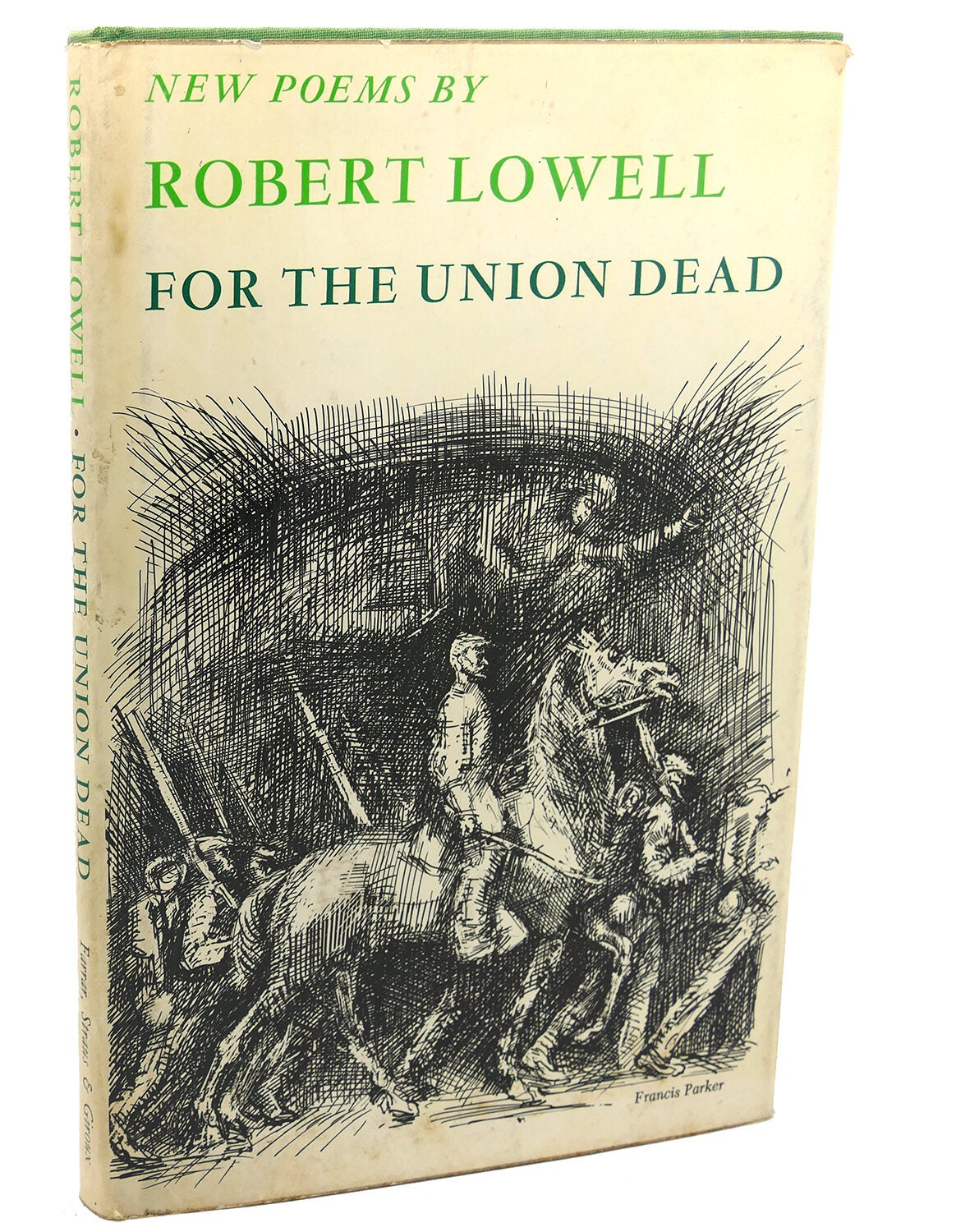
For The Union Dead By Robert Lowell Meaning. It was lowell's sixth book. Its broken windows are boarded.
The relationship between a symbol in its context and what it means is called"the theory behind meaning. This article we'll discuss the challenges of truth-conditional theories of meaning, Grice's examination of meaning-of-the-speaker, and Sarski's theory of semantic truth. We will also consider opposition to Tarski's theory truth.
Arguments against the truth-based theories of significance
Truth-conditional theories of Meaning claim that meaning is a function in the conditions that define truth. However, this theory limits definition to the linguistic phenomena. This argument is essentially that truth-values may not be reliable. So, we need to be able to distinguish between truth values and a plain claim.
The Epistemic Determination Argument is an attempt to justify truth-conditional theories about meaning. It relies upon two fundamental assumptions: omniscience of nonlinguistic facts and the understanding of the truth condition. But Daniel Cohnitz has argued against these assumptions. So, his argument does not have any merit.
Another major concern associated with these theories is that they are not able to prove the validity of meaning. This issue can be addressed through mentalist analysis. The meaning is analysed in the terms of mental representation, rather than the intended meaning. For example there are people who find different meanings to the words when the person uses the same term in different circumstances, however, the meanings of these words could be identical if the speaker is using the same word in both contexts.
The majority of the theories of reasoning attempt to define meaning in way of mental material, non-mentalist theories are sometimes pursued. This could be due to skepticism of mentalist theories. These theories are also pursued in the minds of those who think that mental representation should be assessed in terms of linguistic representation.
Another important advocate for this view one of them is Robert Brandom. This philosopher believes that the sense of a word is derived from its social context and that all speech acts with a sentence make sense in their context in which they're used. This is why he developed a pragmatics theory to explain sentence meanings through the use of the normative social practice and normative status.
A few issues with Grice's understanding of speaker-meaning
Grice's analysis of speaker meaning places particular emphasis on utterer's intent and its relationship to the significance of the statement. He argues that intention is a complex mental condition which must be considered in order to determine the meaning of an utterance. Yet, his analysis goes against speaker centrism by analyzing U-meaning without M-intentions. Furthermore, Grice fails to account for the issue that M intentions are not constrained to just two or one.
Furthermore, Grice's theory does not take into account some essential instances of intuition-based communication. For example, in the photograph example of earlier, the individual speaking isn't clear as to whether she was talking about Bob himself or his wife. This is an issue because Andy's picture doesn't show whether Bob or even his wife is unfaithful , or loyal.
While Grice believes that speaker-meaning is more fundamental than sentence-meanings, there is still room for debate. Actually, the difference is essential to the naturalistic credibility of non-natural meaning. In reality, the aim of Grice is to present naturalistic explanations for such non-natural significance.
To understand a message you must know what the speaker is trying to convey, and this intention is an intricate embedding and beliefs. Yet, we rarely make difficult inferences about our mental state in simple exchanges. Therefore, Grice's interpretation of speaker-meaning is not compatible with the actual psychological processes involved in language understanding.
While Grice's explanation of speaker meaning is a plausible explanation about the processing, it is still far from complete. Others, like Bennett, Loar, and Schiffer, have created more detailed explanations. These explanations can reduce the validity of Gricean theory, because they treat communication as an act that can be rationalized. In essence, the audience is able to believe what a speaker means because they recognize the speaker's intention.
Moreover, it does not provide a comprehensive account of all types of speech actions. Grice's analysis fails to consider the fact that speech is often employed to explain the significance of a sentence. The result is that the purpose of a sentence gets reduced to the meaning of its speaker.
Problems with Tarski's semantic theory of truth
While Tarski posited that sentences are truth-bearing however, this doesn't mean any sentence is always truthful. Instead, he sought out to define what is "true" in a specific context. His theory has since become a central part of modern logic, and is classified as a correspondence or deflationary theory.
One problem with the notion for truth is it cannot be applied to any natural language. This is due to Tarski's undefinability thesis, which states that no bivalent dialect could contain its own predicate. Although English may appear to be an the only exception to this rule but it's not in conflict with Tarski's belief that natural languages are closed semantically.
However, Tarski leaves many implicit restrictions on his theories. For example, a theory must not contain false statements or instances of the form T. Also, it must avoid being a victim of the Liar paradox. Another problem with Tarski's theory is that it's not conforming to the ideas of traditional philosophers. Furthermore, it's unable to describe every instance of truth in terms of normal sense. This is a huge problem for any theories of truth.
The other issue is that Tarski's definition for truth requires the use of notions drawn from set theory as well as syntax. These aren't suitable for a discussion of endless languages. Henkin's style of speaking is valid, but it doesn't support Tarski's definition of truth.
In Tarski's view, the definition of truth also difficult to comprehend because it doesn't take into account the complexity of the truth. Truth for instance cannot play the role of an axiom in an interpretation theory and Tarski's theories of axioms can't clarify the meanings of primitives. Furthermore, the definition he gives of truth is not consistent with the notion of truth in terms of meaning theories.
However, these concerns are not a reason to stop Tarski from using the definitions of his truth and it does not fit into the definition of'satisfaction. The actual definition of the word truth isn't quite as than simple and is dependent on the particularities of the object language. If you're interested in learning more, check out Thoralf's 1919 paper.
The problems with Grice's approach to sentence-meaning
The difficulties in Grice's study of meaning in sentences can be summarized in two principal points. First, the intent of the speaker has to be understood. Also, the speaker's declaration must be supported by evidence that brings about the desired effect. However, these requirements aren't fully met in all cases.
This issue can be fixed through changing Grice's theory of meanings of sentences in order to take into account the meaning of sentences that don't have intentionality. This analysis is also based upon the idea that sentences are complex and include a range of elements. Thus, the Gricean analysis doesn't capture oppositional examples.
This argument is particularly problematic when considering Grice's distinctions between speaker-meaning and sentence-meaning. This distinction is fundamental to any naturalistically based account of sentence-meaning. This theory is also vital for the concept of implicature in conversation. For the 1957 year, Grice offered a fundamental theory on meaning, which was elaborated in subsequent papers. The fundamental concept of meaning in Grice's research is to take into account the speaker's motives in determining what message the speaker wants to convey.
Another issue with Grice's approach is that it does not allow for intuitive communication. For example, in Grice's example, it's not clear what Andy really means when he asserts that Bob is not faithful towards his spouse. However, there are a lot of other examples of intuitive communication that cannot be explained by Grice's explanation.
The main claim of Grice's model is that a speaker must have the intention of provoking an emotion in people. But this isn't in any way philosophically rigorous. Grice determines the cutoff point by relying on indeterminate cognitive capacities of the interlocutor , as well as the nature and nature of communication.
Grice's argument for sentence-meaning does not seem to be very plausible, even though it's a plausible version. Some researchers have offered more specific explanations of meaning, yet they are less plausible. Additionally, Grice views communication as an activity that is rational. Audiences form their opinions by recognizing communication's purpose.
The bronze weathervane cod has lost half its scales. He delivered this poem at. In a sahara of snow now.
The Bronze Weathervane Cod Has Lost Half Its Scales.
What he sees dismays him, especially insofar as he compares it. In a sahara of snow now. The life of this poem started out with a big ol' public bang.
For The Union Dead, A Poem By Robert Lowell.
For the union dead summary. We begin in south boston at the aquarium that's been. In 1960, robert lowell was asked to participate in the boston arts festival and delivered this.
Latest Answer Posted April 20, 2008, 3:32 Am (Utc).
The story's source, that the scenes of death become sites for reanimating the dead and recovering. Its broken windows are boarded. The airy tanks are dry.
It Is Also One Of His Finest Poems.
In a sahara of snow now. For the union dead, title poem of a collection by robert lowell, published in 1964. Commencing as a private meditation of his childhood the poet flashbacks on the.
In A Sahara Of Snow Now.
Once my nose crawled like a snail on the glass; Robert lowell's poem, ''for the union dead'', takes the reader through his free association of thoughts that wander through past, present, and future, and the notion of 'progress'. Robert lowell, for the union dead (april 11, 2001) frank bidart, peter davison, and robert pinsky read lowell's.

Post a Comment for "For The Union Dead By Robert Lowell Meaning"