Sat Nam Wahe Guru Meaning
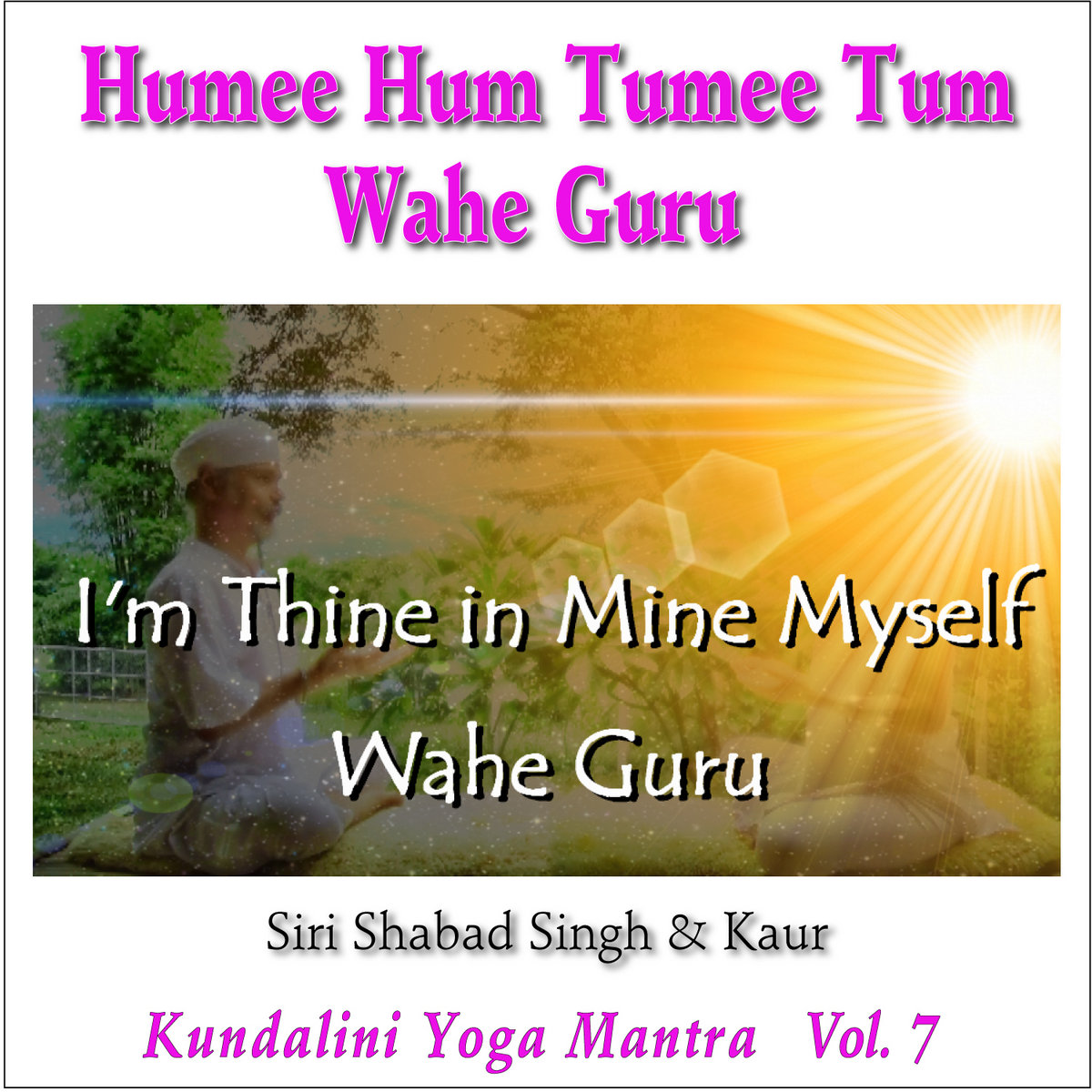
Sat Nam Wahe Guru Meaning. 1) our guru, 2) infinite wisdom, the guru mantra, the mantra of ecstasy, chanting it elevates the spirit; Within the kundalini yoga community of sat nam fest, as with any other kundalini yoga community, you will hear lots of “sat nam!” and “wahe guru!” here is a brief intro to these.
The relationship between a symbol and its meaning is called"the theory behind meaning. Within this post, we will discuss the problems with truth-conditional theories of meaning, Grice's examination of the meaning of the speaker and the semantic theories of Tarski. We will also discuss the arguments that Tarski's theory of truth.
Arguments against the truth-based theories of significance
Truth-conditional theories of Meaning claim that meaning is a function from the principles of truth. However, this theory limits its meaning to the phenomenon of language. The argument of Davidson essentially states that truth-values can't be always the truth. Therefore, we should be able to discern between truth-values and a simple claim.
The Epistemic Determination Argument is a way to establish truth-conditional theories for meaning. It relies upon two fundamental beliefs: omniscience of nonlinguistic facts and knowledge of the truth-condition. However, Daniel Cohnitz has argued against these assumptions. This argument therefore is unfounded.
Another problem that can be found in these theories is that they are not able to prove the validity of meaning. But, this issue is resolved by the method of mentalist analysis. Meaning is analysed in ways of an image of the mind instead of the meaning intended. For instance it is possible for a person to have different meanings of the words when the person uses the same term in the context of two distinct contexts, but the meanings of those terms can be the same as long as the person uses the same phrase in two different contexts.
While the majority of the theories that define significance attempt to explain how meaning is constructed in mind-based content non-mentalist theories are sometimes pursued. This could be because of doubts about mentalist concepts. They also may be pursued for those who hold that mental representation should be assessed in terms of linguistic representation.
One of the most prominent advocates of this position one of them is Robert Brandom. This philosopher believes that significance of a phrase is determined by its social context, and that speech acts using a sentence are suitable in the situation in which they're used. He has therefore developed an argumentation theory of pragmatics that can explain sentence meanings through the use of the normative social practice and normative status.
The Grice analysis is not without fault. speaker-meaning
Grice's analysis of speaker meaning places particular emphasis on utterer's intention and the relationship to the meaning in the sentences. He asserts that intention can be a complex mental state that must be understood in order to determine the meaning of the sentence. However, this theory violates speaker centrism in that it analyzes U-meaning without M-intentions. In addition, Grice fails to account for the fact that M-intentions don't have to be constrained to just two or one.
Also, Grice's approach fails to account for some essential instances of intuition-based communication. For example, in the photograph example of earlier, the individual speaking isn't able to clearly state whether his message is directed to Bob or his wife. This is because Andy's photograph does not show whether Bob and his wife is unfaithful or faithful.
While Grice is right that speaker-meaning is more fundamental than sentence-meaning, there's some debate to be had. In reality, the difference is essential to the naturalistic respectability of non-natural meaning. In fact, the goal of Grice is to offer naturalistic explanations for the non-natural significance.
To understand a message one has to know the intent of the speaker, and this intention is an intricate embedding of intents and beliefs. However, we seldom make elaborate inferences regarding mental states in the course of everyday communication. Therefore, Grice's interpretation on speaker-meaning is not in line to the actual psychological processes involved in communication.
Although Grice's explanation of speaker-meaning is a plausible explanation about the processing, it is only a fraction of the way to be complete. Others, such as Bennett, Loar, and Schiffer, have created more detailed explanations. These explanations, however, may undermine the credibility on the Gricean theory since they see communication as an act of rationality. Fundamentally, audiences be convinced that the speaker's message is true because they know the speaker's motives.
Moreover, it does not reflect all varieties of speech acts. Grice's approach fails to recognize that speech acts are commonly employed to explain the meaning of a sentence. The result is that the meaning of a sentence can be reduced to the meaning of the speaker.
The semantic theory of Tarski's is not working. of truth
While Tarski claimed that sentences are truth bearers It doesn't necessarily mean that the sentence has to always be true. In fact, he tried to define what constitutes "true" in a specific context. The theory is now the basis of modern logic, and is classified as a deflationary theory or correspondence theory.
One problem with the notion on truth lies in the fact it can't be applied to natural languages. This is due to Tarski's undefinability hypothesis, which states that no bivalent language can have its own true predicate. While English may seem to be an the exception to this rule and this may be the case, it does not contradict with Tarski's theory that natural languages are closed semantically.
Yet, Tarski leaves many implicit rules for his theory. For example it is not allowed for a theory to contain false sentences or instances of the form T. This means that a theory must avoid the Liar paradox. Another problem with Tarski's theory is that it isn't in line with the work of traditional philosophers. Furthermore, it's not able explain all cases of truth in terms of ordinary sense. This is a significant issue for any theories of truth.
The other issue is the fact that Tarski's definitions of truth requires the use of notions drawn from set theory as well as syntax. These aren't suitable when considering infinite languages. Henkin's language style is valid, but it doesn't support Tarski's definition of truth.
His definition of Truth is insufficient because it fails to reflect the complexity of the truth. For instance, truth cannot serve as an axiom in an analysis of meaning the axioms of Tarski's theory cannot describe the semantics of primitives. In addition, his definition of truth is not consistent with the notion of truth in terms of meaning theories.
However, these issues are not a reason to stop Tarski from applying this definition, and it is not a fall into the'satisfaction' definition. In fact, the exact concept of truth is more precise and is dependent upon the specifics of object-language. If you're interested in learning more, refer to Thoralf Skolem's 1919 essay.
Problems with Grice's understanding of sentence-meaning
The problems that Grice's analysis has with its analysis regarding the meaning of sentences could be summed up in two key points. First, the motivation of the speaker needs to be recognized. The speaker's words is to be supported by evidence that brings about the intended outcome. But these conditions may not be met in every case.
This issue can be addressed with the modification of Grice's method of analyzing sentence-meaning to include the significance of sentences that are not based on intention. This analysis also rests on the notion the sentence is a complex and have a myriad of essential elements. So, the Gricean analysis fails to recognize any counterexamples.
This critique is especially problematic when we look at Grice's distinctions among speaker-meaning and sentence-meaning. This distinction is crucial to any naturalistically valid account of sentence-meaning. This theory is also important in the theory of conversational implicature. This theory was developed in 2005. Grice presented a theory that was the basis of his theory, which expanded upon in subsequent writings. The basic concept of significance in Grice's work is to consider the intention of the speaker in determining what message the speaker wants to convey.
Another issue with Grice's model is that it doesn't make allowance for intuitive communication. For instance, in Grice's example, it's unclear what Andy is referring to when he says that Bob is not faithful and unfaithful to wife. However, there are a lot of examples of intuition-based communication that cannot be explained by Grice's theory.
The central claim of Grice's analysis requires that the speaker must aim to provoke an effect in viewers. However, this assumption is not intellectually rigorous. Grice defines the cutoff in relation to the different cognitive capabilities of the interlocutor , as well as the nature and nature of communication.
Grice's interpretation of sentence meaning is not very plausible although it's an interesting analysis. Other researchers have come up with more specific explanations of meaning, but they seem less plausible. Additionally, Grice views communication as an act of reason. Audiences reason to their beliefs through recognition of the message being communicated by the speaker.
Vāhigurū) is a word used in sikhi to refer to god as described in guru granth sahib. Ek ong kar sat nam siri wahe guru there is one creator who created this creation, truth is it's identity, oh great one who brings the light amidst. 1) hari is a krishna’s name, narayan means.
Vāhigurū) Is A Word Used In Sikhi To Refer To God As Described In Guru Granth Sahib.
Sat is briefly and powerfully chanted at the navel point. Ek ong kar sat nam siri wahe guru there is one creator who created this creation, truth is it's identity, oh great one who brings the light amidst. Sat nam means truth is my identity and i call upon the eternal truth that resides in all of us.
It Is A Short Syllable.
This is the time when you will hear some yogis use the. 3) inhale a short half breath. What is the meaning of sat nam?
In This Instance, This Would Mean, Whose Name Is Truth.
Nam vibrates at the heart center. 1) our guru, 2) infinite wisdom, the guru mantra, the mantra of ecstasy, chanting it elevates the spirit; The meaning of the word vāhigurū (usually spelled in english.
How To Chant Ek Ong Kar Sat Nam Siri Wahe Guru:
1) hari is a krishna’s name, narayan means. Chanting this mantra awakens the soul, and more simply means really. Sat nam sat nam wahe guru wahe guru i identify with truth, i am one with truth, praise the highest wisdom & bringer of light, praise the highest wisdom & bringer.
Siri Is Pronounced As If Spelled S’ree;
Exhale with the four part. Ong namo means, “i bow to the divine wisdom of all that is.” guru dev namo means, “i bow to the divine teacher within.” this mantra helps center the practioner for asana or meditation. Whose name is truth the word sat means true/everlasting and nam means name.

Post a Comment for "Sat Nam Wahe Guru Meaning"