2 Way Street Meaning
2 Way Street Meaning. A term implying that you have to hold yourself to the same expectations as you hold others to. For example, in this sentence:
The relationship between a sign in its context and what it means is known as"the theory of significance. In this article, we'll discuss the problems with truth-conditional theories of meaning, Grice's examination of speaker-meaning and Sarski's theory of semantic truth. The article will also explore evidence against Tarski's theories of truth.
Arguments against truth-conditional theories of significance
Truth-conditional theories of Meaning claim that meaning is a function of the conditions that determine truth. However, this theory limits its meaning to the phenomenon of language. The argument of Davidson is that truth-values can't be always truthful. So, it is essential to know the difference between truth-values versus a flat assertion.
The Epistemic Determination Argument is a method to argue for truth-conditional theories on meaning. It is based upon two basic theories: omniscience regarding non-linguistic facts and understanding of the truth condition. However, Daniel Cohnitz has argued against these assumptions. So, his argument is not valid.
Another frequent concern with these theories is the impossibility of the concept of. However, this problem is addressed by mentalist analyses. The meaning can be examined in the terms of mental representation instead of the meaning intended. For instance someone could see different meanings for the exact word, if the person is using the same word in both contexts, however the meanings that are associated with these words can be the same regardless of whether the speaker is using the same phrase in various contexts.
Although most theories of meaning try to explain their meaning in relation to the content of mind, other theories are occasionally pursued. This could be due to doubt about the validity of mentalist theories. These theories can also be pursued through those who feel mental representations should be studied in terms of the representation of language.
One of the most prominent advocates of this idea A further defender Robert Brandom. He believes that the purpose of a statement is determined by its social surroundings and that the speech actions comprised of a sentence can be considered appropriate in any context in that they are employed. He has therefore developed a pragmatics theory to explain the meaning of sentences by utilizing social normative practices and normative statuses.
There are issues with Grice's interpretation of speaker-meaning
Grice's analysis of speaker meaning places significant emphasis on the utterer's intention as well as its relationship to the meaning and meaning. Grice believes that intention is something that is a complicated mental state which must be considered in for the purpose of understanding the meaning of sentences. But, this method of analysis is in violation of speaker centrism by looking at U-meaning without M-intentions. Furthermore, Grice fails to account for the fact that M-intentions are not strictly limited to one or two.
Moreover, Grice's analysis doesn't account for important cases of intuitional communication. For instance, in the photograph example from earlier, a speaker does not clarify whether she was talking about Bob as well as his spouse. This is due to the fact that Andy's image doesn't clearly show whether Bob or even his wife are unfaithful or loyal.
While Grice is right that speaker-meaning has more significance than sentence-meaning, there's some debate to be had. In fact, the difference is essential to the naturalistic acceptance of non-natural meaning. Indeed, Grice's goal is to provide naturalistic explanations that explain such a non-natural meaning.
To fully comprehend a verbal act we need to comprehend the intent of the speaker, and this is a complex embedding of intentions and beliefs. Yet, we do not make intricate inferences about mental states in regular exchanges of communication. This is why Grice's study of speaker-meaning does not align with the actual psychological processes involved in language comprehension.
While Grice's explanation of speaker meaning is a plausible explanation for the process it is but far from complete. Others, such as Bennett, Loar, and Schiffer have proposed more detailed explanations. However, these explanations tend to diminish the plausibility of Gricean theory, because they view communication as an activity rational. The basic idea is that audiences accept what the speaker is saying as they comprehend their speaker's motivations.
It does not make a case for all kinds of speech actions. Grice's method of analysis does not consider the fact that speech acts are usually used to explain the meaning of sentences. The result is that the content of a statement is reduced to the meaning of the speaker.
The semantic theory of Tarski's is not working. of truth
While Tarski declared that sentences are truth-bearing it doesn't mean the sentence has to always be correct. Instead, he sought out to define what constitutes "true" in a specific context. The theory is now a central part of modern logic, and is classified as correspondence or deflationary theory.
One drawback with the theory of the truthful is that it can't be applied to natural languages. This is because of Tarski's undefinabilitytheorem, which states that no bivalent language could contain its own predicate. While English could be seen as an the only exception to this rule however, it is not in conflict with Tarski's stance that natural languages are closed semantically.
Nonetheless, Tarski leaves many implicit constraints on his theory. For instance it is not allowed for a theory to contain false statements or instances of form T. That is, a theory must avoid this Liar paradox. Another problem with Tarski's theories is that it is not congruous with the work done by traditional philosophers. In addition, it's impossible to explain every single instance of truth in the terms of common sense. This is a huge problem in any theory of truth.
Another problem is that Tarski's definition demands the use of concepts taken from syntax and set theory. They are not suitable when looking at infinite languages. Henkin's style of speaking is well-founded, however it doesn't fit Tarski's definition of truth.
This definition by the philosopher Tarski problematic because it does not consider the complexity of the truth. For instance, truth cannot be predicate in an interpretive theory and Tarski's axioms cannot be used to explain the language of primitives. Further, his definition on truth is not in line with the notion of truth in definition theories.
However, these difficulties should not hinder Tarski from applying its definition of the word truth and it does not conform to the definition of'satisfaction. In fact, the true notion of truth is not so straight-forward and is determined by the particularities of the object language. If you'd like to learn more, refer to Thoralf's 1919 work.
Probleme with Grice's assessment of sentence-meaning
The problems with Grice's analysis of meaning in sentences can be summarized in two primary points. First, the intention of the speaker should be recognized. Second, the speaker's wording must be accompanied with evidence that confirms the intended outcome. These requirements may not be fulfilled in all cases.
This problem can be solved by changing the analysis of Grice's sentence-meaning to include the significance of sentences that do have no intentionality. This analysis also rests on the premise of sentences being complex and include a range of elements. As such, the Gricean analysis does not capture any counterexamples.
This argument is particularly problematic when considering Grice's distinctions between meaning of the speaker and sentence. This distinction is crucial to any naturalistically valid account of sentence-meaning. This theory is also crucial for the concept of implicature in conversation. The year was 1957. Grice gave a foundational theory for meaning that was refined in later studies. The basic notion of meaning in Grice's work is to examine the speaker's intent in determining what the speaker wants to convey.
Another issue in Grice's argument is that it does not reflect on intuitive communication. For instance, in Grice's example, it is not clear what Andy uses to say that Bob is unfaithful in his relationship with wife. But, there are numerous variations of intuitive communication which are not explained by Grice's research.
The premise of Grice's analysis requires that the speaker's intention must be to provoke an effect in an audience. But this isn't philosophically rigorous. Grice sets the cutoff on the basis of potential cognitive capacities of the interlocutor and the nature of communication.
Grice's analysis of sentence-meaning is not very plausible however it's an plausible analysis. Others have provided better explanations for meaning, but they are less plausible. Furthermore, Grice views communication as an act of rationality. The audience is able to reason by understanding the speaker's intent.
Yes, the phrase 'friendship is a two way street' is used to mean that friendship should be reciprocal, involving give and take and mutual respect. A term implying that you have to hold yourself to the same expectations as you hold others to. (noun) a good friendship i.
Meaning, Definition, Shape, Location, Color, And More.
Meaning if you want something from a person, you have to give the same to them back. Street the part of a thoroughfare. An arrangement or a situation involving reciprocal obligation or mutual action | meaning, pronunciation, translations and examples
Is Two Way Street An Idiom?
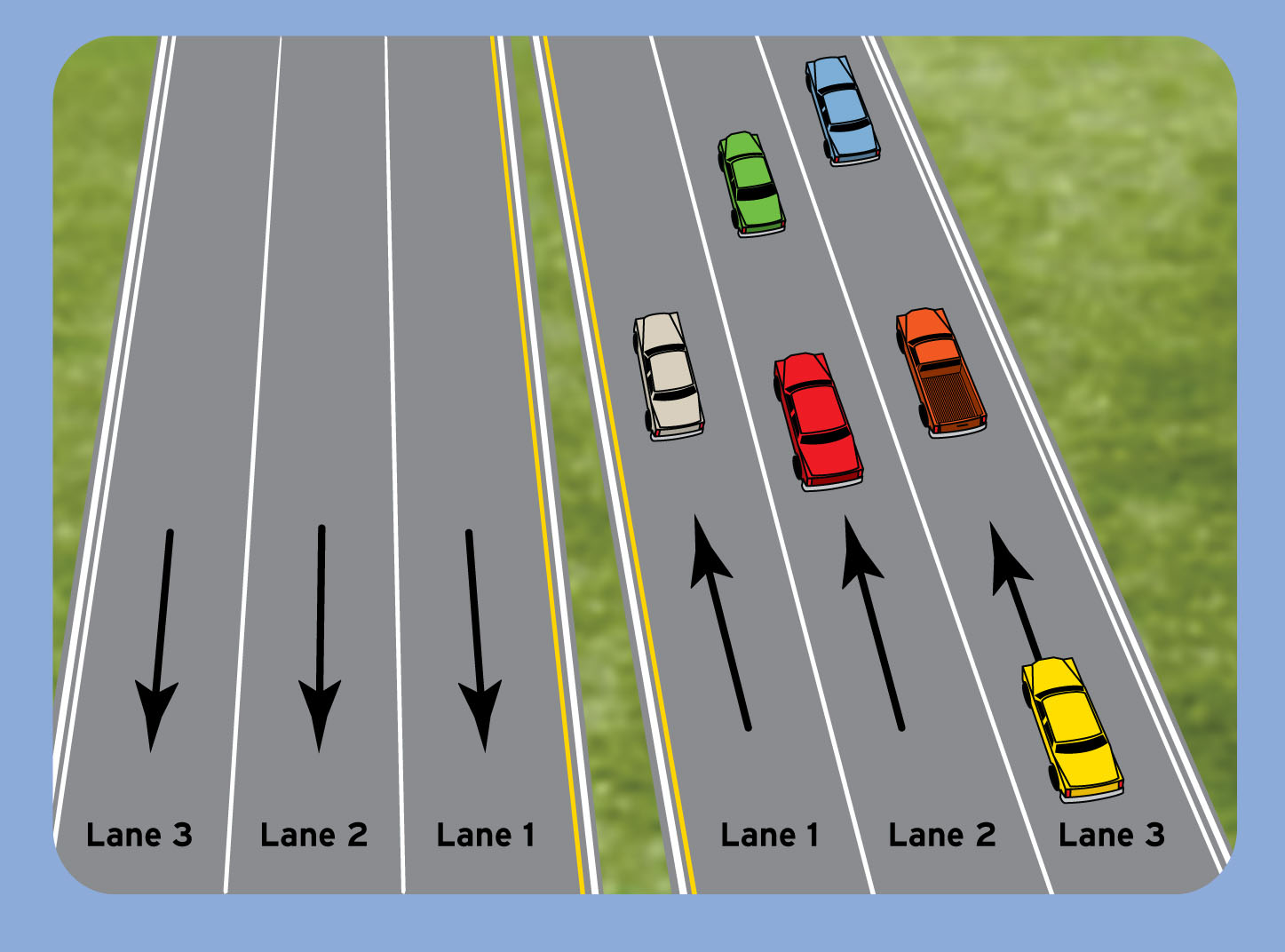
These two way traffic signs. Definitions by the largest idiom dictionary. Moving or allowing movement in both directions:
(Idiomatic) A Social Interaction In Which Both Parties Are Expected To Give And Take Equally.
In the united kingdom, it is usually referred. Tit for tat, this for that. Yes, the phrase 'friendship is a two way street' is used to mean that friendship should be reciprocal, involving give and take and mutual respect.
Definitions By The Largest Idiom Dictionary.
A term implying that you have to hold yourself to the same expectations as you hold others to. Is respect a 2 way street? (noun) a good friendship i.
Anyone At Any Level In An Organization Can Show Respect Towards Others.
The two way traffic sign is a warning sign. Small acts of kindness in the workplace can spread, creating a monumental increase in respect. For example, in this sentence:

Post a Comment for "2 Way Street Meaning"